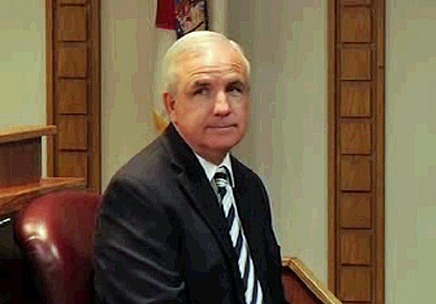
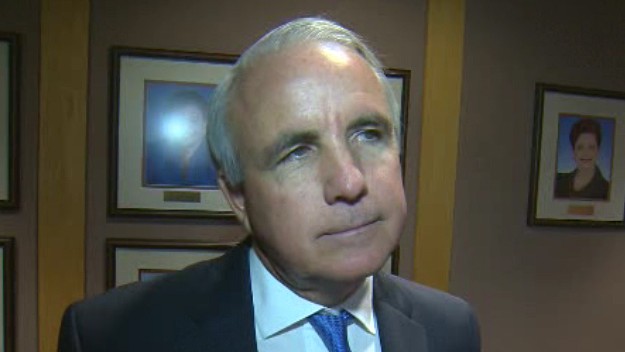
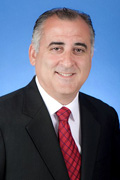
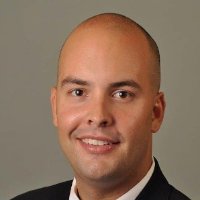
Former Coral Gables Mayor Raul Valdes-Fauli isn’t the only one who wants his old job back at City Hall. Former 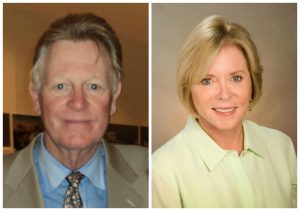 Commissioner Wayne “Chip” Withers, who served for 20 years before leaving office in 2011, qualified last month — for the seat occupied by incumbent Commissioner Pat Keon.
He could have run for the open seat. But Withers has personal, friendly relationships with three of the four candidates there, he told Ladra. Apparently, he does not have a friendly relationship with Keon. Withers supported Mary Young against Keon in 2013.
“I felt I could really go after an incumbent,” Withers said in his aw-shucks Forrest Gump style, which seems disarmingly honest.
And Keon is ripe for the taking. Not known for being exactly responsive to residents, she has become a target for some of the anti-development forces who don’t like some of the larger projects on the city’s horizon, including the Riviera Neighborhood Association, of which he is a member (and who reportedly was shopping around for a candidate), who fought hard against the Paseo project and is now up in arms about a possible overlay zoning district along South Dixie Highway. The commissioner always seems to be making excuses for developers, they say. She treats residents like they don’t know what’s best for them and she knows better.
Read related story: Jeannett Slesnick winning mayoral money race
“There is a general concern that when the choice is between the wishes of a residential community and a developer, they feel that its in favor of the developer a lot of the time,” Withers told Ladra. “Whether that’s perceived or real, it’s there. And there’s an erosion of trust.”
Keon said she was not surprised when Withers jumped into the race. “People were looking for someone to run against me, and I guess he was the taker,” she told Ladra. “We’ll still run a good campaign. He has name recognition. He was a good commissioners for along time, but he said he was tired of it. Now he’s back.”
Keon said it’s all because Withers is mad that the Paseo project was approved last year. But, she added, she only voted in favor after developers scaled down the size and height and made it more palatable for the surrounding neighborhood. “They brought it down a lot and stepped it back from the neighborhood.”
But Withers said the project is still too large and out of scale for the people who live adjacent to it and, more importanty, that the process was flawed. The peer review was tainted, he said, because it was done by architects who worked for the project’s architect on other sites or boards. And he did not get a notice about the zoning hearing because he lives 1,150 feet away on Hardee and the city only notifies residents within 1,000 feet.
He wants to increase notification to residents within a three-mile radius. He also wants to change the amount of time between first and second reading from 30 to 60 days and require a 4/5ths vote on land use changes.
Read related story: Coral Gables explores more development along U.S. 1
Withers said the more recent move to create a zoning master plan for U.S. 1 “is scary” and that the city should work to redevelop or revitalize its 1.8 miles along the federal highway with the cities of South Miami to the southwest and 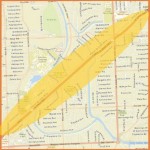 Miami to the northeast for a more consistent zoning application. Otherwise, he says, what we may end up with is a canyon of tall buildings like there is on Bird Road just east of Ponce de Leon Boulevard.
“This is why I got back in,” he said. “All these projects coming online. If we don’t get everything in order, it’s going to be a mess,” Withers said.
“I know I’m an old guy,” said the 65-year-old grandfather. “But I was there for 20 years and I know what worked and what didn’t work.”
He said that things put on the books 20-years ago, like the Mediterranean ordinance that provides for more density as bonus for Mediterranean architecture, might be tweaked. Maybe bonuses should be considered for downtown infill development. “Maybe instead of getting an extra four floors for looking like a Mediterranean castle, you get a bonus for having more green space or more open space.
“I’m not a ‘burn it down’ guy. I know we need development. We have a downtown that pays a majority of our tax base. It would be stupid to kill the golden goose.
“But we can’t let it kill our quality of life,” he said.
Keon said that the city is doing better than it was when Withers was in office, with more money in reserves and a AAA bond rating. She sounds a lot like the city manager when she talks, and no, it is not just because both are women. It’s almost like Keon has picked up Cathy Swanson Rivenbark‘s buzzwords, cadence — even her southern twang.
Withers told Ladra he is staying out of the mayoral bout because he knows and respects both Valdes-Fauli, who he served with for many years, and Slesnick, whose husband he also served with on the dais.
But the Gables is a city where voters, not the candidates themselves, often create slates. Withers and Slesnick are already getting grouped together — along with Marlin Ebbert in the second commission race — by an endorsement from the Riviera Neighbhorhood group.
You can already see the yard signs for the three candidates all up and down South Alhambra and the surrounding streets.
read more
And the $350,000 would go to an FIU program run by
a former president — who gave $20,000 to his campaigns
Miami-Dade Mayor Carlos Gimenez must have opened another drawer the other day. 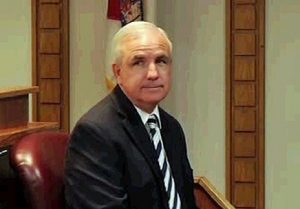 Because he found some more money for something he wants that means absolutely nothing to the constituents and people who he allegedly serves.
Gimenez wants to spend $350,000 to give 30 top administrators — the members of his inner circle and keepers of his darkest secrets — some leadership classes at Florida International University that the Miami Herald’s usually dry Doug Hanks very correctly interpreted as “lessons on self-awareness, body language and the impact of family backgrounds,” whatever that is. He forgot “how to engage with others.”
And, get this: Next year, Gimenez wants to send 100 staffers. Would that then cost the county $1.2 million? For an education in body language and self awareness?
Really? Really? This is the best way to spend our hard-earned tax dollars? Why don’t we let the cronies at the county compete with the already vastly eduated public? It’s not our job to ensure that they meet the standards of good leadership? With the inclusion of a psychologist on the panel of teachers, it seems that we are also providing these understandably traumatized public employees with much-needed therapy (is there a couch, too?).
There was so much hype a couple of years ago about former Commissioner Juan Zapata billing the county $31,000 for a Harvard “master’s” program — even though Commissioner Jean Monestime also got reimbursed $12,400 for a Harvard “executive business” course and nobody talked about that — that this seems a little, well, hypocritical at worst, frivolous at best. Ladra has it on good authority that the Zapata story was pushed by a Gimenez aide to discredit one of the mayor’s biggest critics. And now they promote this as progressive minded. How convenient.
Can it be because the mayor has been safely elected for the last time (at least consecutively), spending $350,000 on continuing education for 30 of the mayor’s chosen county employees — the ones who know where the bones are buried — is suddenly okay? Can someone say double standard?
Or could it simply be quid pro quo?
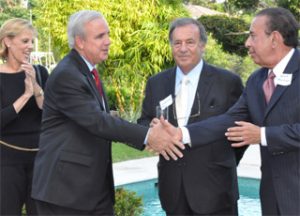
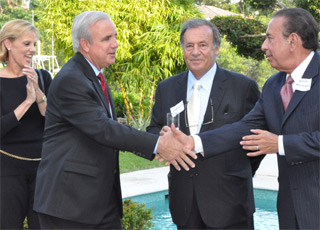
Carlos Gimenez shakes Mitch Maidique’s hand at a fundraiser at Jeff Berkowtiz’s home.
Former FIU President Modesto “Mitch” Maidique — who designed the FIU Center for Leadership and is employed by it — gave Gimenez at least $20,000 in campaign contributions to the mayoral account and both political action committees since 2011 (including $14,000 from his then-wife, Nancy Maidique).
Maybe former county commissioner Katy Sorenson and her husband should have donated to the Gimenez PAC to keep the Good Government Initiative at the University of Miami going. Certainly, his staffers would benefit more from ethics lessons than any self-awareness or body language bullshit.
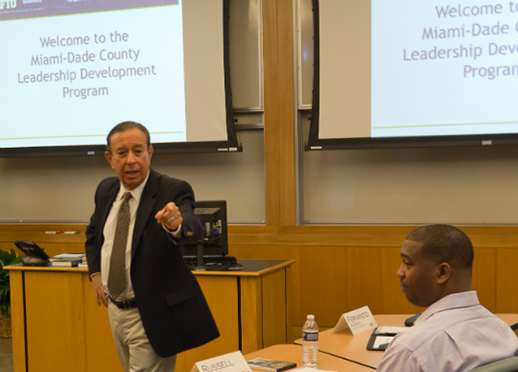
Some of the new “students” identified in a Gimenez memo are the same members of his inner circle who already took a one-day, 10-hour “leadership course,” because one has to use the term loosely, at the same FIU scam, er, program in 2012.
Sure, it was just a one-day intensive course but that 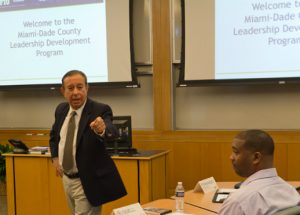 class (photographed to the left) was attended by Gimenez, his five deputy mayors — Russell Benford, Alina Hudak, Chip Iglesias, Ed Marquez and Bernard “Jack” Osterholt — his former communications chief Fernando Figueredo, his former deputy and current chief of staff, Alex Ferro, Inson Kim, who was his director of policy and legislative affairs then and is now heading the communications and outreach department, former senior advisor Lisa Martinez and Budget Director Jennifer Moon.
Guess it didn’t stick because they are all going back to school. Every one of the administrators who took the 2012 crash course are coming back to campus (with the exception of the three who are no longer at the county). Plus now the list attached to the mayor’s memo also includes what looks like every department director: Communications Director and Mouthpiece Michael Hernandez, Fire Chief David Downey, Police Director Juan Perez, Human Resources Director Arleene Cuellar, Transportation and Public Works Director Alicia Bravo, Water and Sewer Director Lester Sola, Seaport Director Juan Kuryla, Director of Cultural Affairs Michael Spring and so on and so on and so on.
These are people who make six figure annual salaries. Kuryla is at $297,000. Ed Marquez makes $267,000. Alina Hudak gets paid just under $259,000. Sola and Osterholt each make about $250,000. Which means they can all afford to pay for their own professional development. Why is that the taxpayer’s responsibility?
And shouldn’t they already possess this particular skill set? Wouldn’t this course be more geared to build a bench from the assistant directors and supervisors who are really doing all the work anyway?
I mean, if Alina Hudak and Ed Marquez and Russell Benford and Lester Sola and Juan Kuryla don’t know how to read body language already, we’re worse off than anyone thought. What do they say about teaching old dogs? And we certainly don’t need them to be more self aware. We need them to be more aware of everybody else.
Or is this how Gimenez, who is on his last four years, trying to help his cronies be more employable when he’s gone?
This whole thing smells fishy. Too bad they can’t see Ladra’s body language. They would have no trouble reading it.
It says, “Bitch, please.”

read more
TheyGiddy Republicans are about to dismantle the Affordable Healthcare Act, removing a safety net that catches 2.2 million Floridians who may otherwise not have insurance. Meanwhile, Gov. Rick Scott and our state GOP legislators 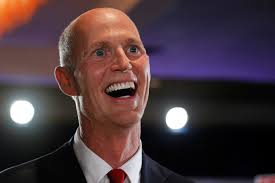 want to turn Medicaid into a capped voucher system that could cut out some people with chronic care needs.
At the same time, there’s talk — and even a Florida House bill — about replacing existing federal matching funds for 4 million Florida Medicaid patients (including 2.3 million children), that are now eligible via federal guidelines, to “block grants” that would allow states to make its own decisions on how to spend those funds — and on whom.
Ouch. That’s gonna hurt some people.
So say the doctors and nurses at Jackson Memorial Hospital, who know first hand what its like to treat a community that uses the emergency room as its primary care center. 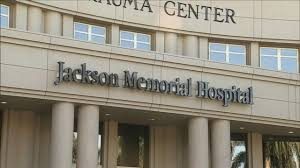 There is never any follow up. Chronic illnesses get worse. People miss work. They self medicate. They begin to depend on other public programs and end up in the ER again — costing taxpayers more in the long run.
Jackson staff will join other health advocates and patients Thursday to highlight what exactly is at stake if the GOP gets its way. That includes the possible reduction of $33 billion in federal funding for healthcare over the next 10 — insufficient funding to provide the current level of services for enrollees, Florida’s Legislature will have to choose between increasing revenue, limiting enrollment, reducing services, or lowering provider reimbursement rates.
This is the point of Thursday’s rally at the Miami stop for the Save My Care Bus Tour, a two-month, cross-country tour that has traveled more than 7,000 miles to at least 30 events in 15 states to tell the stories of the more than 30 million Americans who will lose their health care under a repeal plan.
People like Gloria Bauta, a doula in Miami for 17 years. Bauta, 37, was not able to afford health insurance until the ACA was passed. Since college, she has suffered from chronic pain and gastrointestinal issues. After getting  Obamacare, she was finally able to see a doctor and was diagnosed with multiple autoimmune diseases. She has been able to get various treatments with her affordable care plan.
“There’s no way I could afford to get treated, or even diagnosed, without the ACA,” she says.
Bauta is horrified by the idea that federal and state officials would consider reducing the Medicaid program in Florida. Most of her pregnant clients are on Medicaid and she’s not sure how the proposal would impact them.
Like the “town hall” protests during last week’s Congressional recess, the bus tour wants to shine a light on the potential consequences if Republicans at the state and federal level are able to cut a deal to pay for some aspects of their new plan by effectively gutting Medicaid through block grants and per capita caps.
“Every day it becomes more clear that most people want to keep the Affordable Care Act because they recognize that  killing it is a huge step backward for everyone’s health,” said Martha Baker, RN, president of SEIU Local 1991, which represents nurses, doctors and other professionals at Jackson Health System, the state’s largest public hospital.
“If a deal is cut to pay for a bad plan to replace the ACA by reducing coverage to seniors, children, people with disabilities, and veterans, then our elected officials are moving in the wrong direction and our most vulnerable citizens will bear the brunt,” Baker said in a statement.
They fear that Medicaid block grants cap coverage, which means limiting eligibility, establishing waiting lists and cutting reimbursements to healthcare providers. Doctors and patients would be facing impossible choices in just a few years, when the impact of the cuts and capped funding are fully felt.
“The destabilization of Florida’s health safety net threatens to overturn significant progress made for millions of Floridians finally able to afford quality healthcare and will ultimately cost the state’s taxpayers more down the road,” said Katy Huddlestun, an attorney with Florida Legal Services.
Fun facts Ladra learned regarding the repeal of ACA and the Medicaid changes proposed:
- Right now, the federal government guarantees 60% of Medicaid costs in Florida (it goes up to 62% in 2019). t is based on income levels so when more peope qualify, or during emergencies (i.e., hurricanes and Zika outbreaks) the funding increases.

- In Florida, the elderly and the blind and disabled make up only 22.5 % of the current eligible patients (7% and 15.5%, respectively) but account for more than 60% of the costs.
- Florida stands to lose over $8 billion in federal dollars annually. Most of those dollars (more than $6.1 billion) go to pay for the premium tax credits and cost sharing reductions that make insurance affordable for low and moderate-income Floridians.
- Over the next ten years, Florida could lose more than $33 billion over 10 years, or a 23% reduction in federal funding.
- The changes (read: cuts) also represent a potential loss of 180,000 or so jobs.
More statistics and stories like Bauta’s will be shared at Thursday’s rally, which begins at 11 a.m. at 1601 NW 8th Ave., just east of Jackson Memorial Hospital.
Where are our local leaders on this? Miami-Dade and Hialeah — which is one of if not the highest Obamacare enrollment area in the nation — should be front and center in ensuring that our residents keep their healthcare.
read more
If there is anything we should have learned from the discovery last year that the mayor’s best friend was making  $200 an hour as a subcontractor on a Miami-Dade Water and Sewer Department project is that these contracts need a little more scrutiny.
But it looks like we learned nothing because they aren’t getting it.
There are eight contracts worth more than $82.5 million on the county commission agenda Wednesday. But they are bunched up together and on the consent agenda, which means there is no discussion — unless one of our more enlightened commissioners pulls it out to get more details. You know who you are.
They might want to know, for instance, that the mayor’s daughter-in-law works for one of the subcontractors on one of the eight contracts.
Read related story: Barby Gimenez shows up to no-show job on county dime
The three resolutions are to ratify the mayor’s actions. The commission Wednesday just has to accept them; it looks like there’s really no choice. One of them should ask. Because these are not small contracts:
- A two-year countywide contract for cleaning and televising of large diameter sewers for $6 million to Layne Inliner LLC
- A construction contract for water plant upgrades to Poole & Kent for $24.9 million

- A one-year countywide contract for rehabilitation of sanitary sewers by the sectional living method to UIT LLC for $4 million
- A construction contract for the north district wastewater treatemant plant new pumps for existing deep injection well-pumping station to Poole & Kent for $6.3 million
- A two-year countywide contract for removal and replacemnt of “sanitary sewer gravity mains” to Metro Express Inc. for $14 million
- An eight-year (!) non-exclusive professional services agreement for hydrogeologic and engineering services for disposal, water supply, monitoring wells and aquifer storage and recovery to MWH Americas Inc for $16.5 .million
- A six-year (!) non-exclusive professional services agreement for engineering, design and related services for the design of large diameter water pipelines to Parson Brinckerhoff, Inc, for $5.5 million
- A six-year (!) non-exclusive professional services agreement for engineering design and related services for large diameter water pipelines to EAC Consulting for $5.5 million (which sounds redundant and like someone is spreading the wealth among more golden ticket holders),
These are certainly things that must be done. We have federal and state court-mandated consent decrees to correct the years of neglect on our water and sewer system that our county allowed to be perpetrated — perhaps intentionally so that they could then dole out millions of dollars to their friends and contributors. There are 81 consent decree 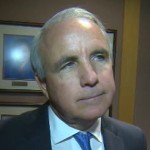 projects, according to the county. And it’s why your water bill went up 6 percent last year, is going up 9 percent this year and will increase by about 30 percent over the next 10 years.
That’s a lot of millions to pass around to the mayor’s family and friends. We’re just getting started.
In this case, the mayor — who was just elected raising $8 million or so worth of gifts from some of these very same contractors and their lobbyists — is doling out contracts and getting the commission’s approval afterwards. Yes, this is allowed because, in 2014, the commission, in all its wisdom (not!), approved a resolution authorizing the mayor to award contracts for already funded capital projects “and related goods and services, and to accelerate the approval of WASD’s (1) consent decree projects and (2) projects identified in WASD’s Multiy Year Capital Plan’s Capital Improvements Program without the need of prior board approval but subject to ratification.”
Read related story: Why Carlos Gimenez should not have four more years
But some of these contracts date as far back as September, which makes Ladra wonder what kept them from the commission ratification for so long. An election, perhaps? Wasn’t Gimenez allowed to award these contracts so they could be expidited? Does this look expidited to anyone? Or does this mean that these prizes, er, we mean contracts have already been awarded and the commission action is just a rubberstamp afterthought?
Of course, this has nothing to do with expiditing nada. This was just good campaign planning. And then they wonder why people think this is the multi-million payback of IOUs collected during the campaign.
Only half of the contractors on Wednesday’s agenda had immediately obvious connections to Gimenez and his  campaign. But it’s the big half: $53.2 million of the $82.5 million public trough buffet.
Poole & Kent Co. is represented by former Miami City Manager Sergio Pereira. Parsons Brinckerhoff is represented by Perreira and Gimenez buddy Alex Heckler, who has already gotten pieces of the WASA consent decree pie. MWH Americas is represented by Miguel de Grandy.
All of them have given to Gimenez’s campaign. Heckler had at least one big fundraiser for the mayor in Miami Beach. Most of the companies are familiar from the mayor’s campaign reports also.
But if you look more closely, at the back-up material that comes with the commission agenda, there are also 39 subcontractors between them getting a piece of this very big tarta de guayaba. These include:
- BND Engineers
- FR Aleman & Associates (on two contracts)
- HBC Engineering (on two contracts)
- HydroDesigns LLC
- Kimley Horn & Associates
- MCO Construction and Services
- Milian Swain and Associates
- Mirecki Geoscience LLC
- Schlumberger Water Services USA
- Tetra Tech Inc
- The Sharpton Group P.A.
- AMBRO Inc.
- Aluces Corporation
- MAGBE Consulting Services
- Nova Consulting Inc.
- Bello and Bello Land Surveying
- EV Services (where the mayor’s daughter-in-law works)
- Oracle Consulting Group, LLC
- Robayna & Associates
- SRS Engineering
- 300 Engineering Group
- Benson Electric, Inc. (on two contracts)
- Mar’s Contractors, Inc.
- Exceletech Coating and Application, Inc.
- Emerson Process Management Power and Water Solutions, Inc.
- Sunshine State Air Conditioning
- Gomez and Son Fence
- Corcel Corp.
- Ovivo USA LLC
- Dixie Metal Products, Inc.
- Shand & Jurs
- Ferguson Waterworks (on two contracts)
- Infrastructure Repair Systems
- Manufactured Technologies Corporation
- Revere Control Systems, Inc.
- Carter and Verplanck, Inc
- Equipment Plus Solutions
- American Builders Masters
- A & B Pipe and Supply
Apparently, Gimenez has a lot of IOUs.
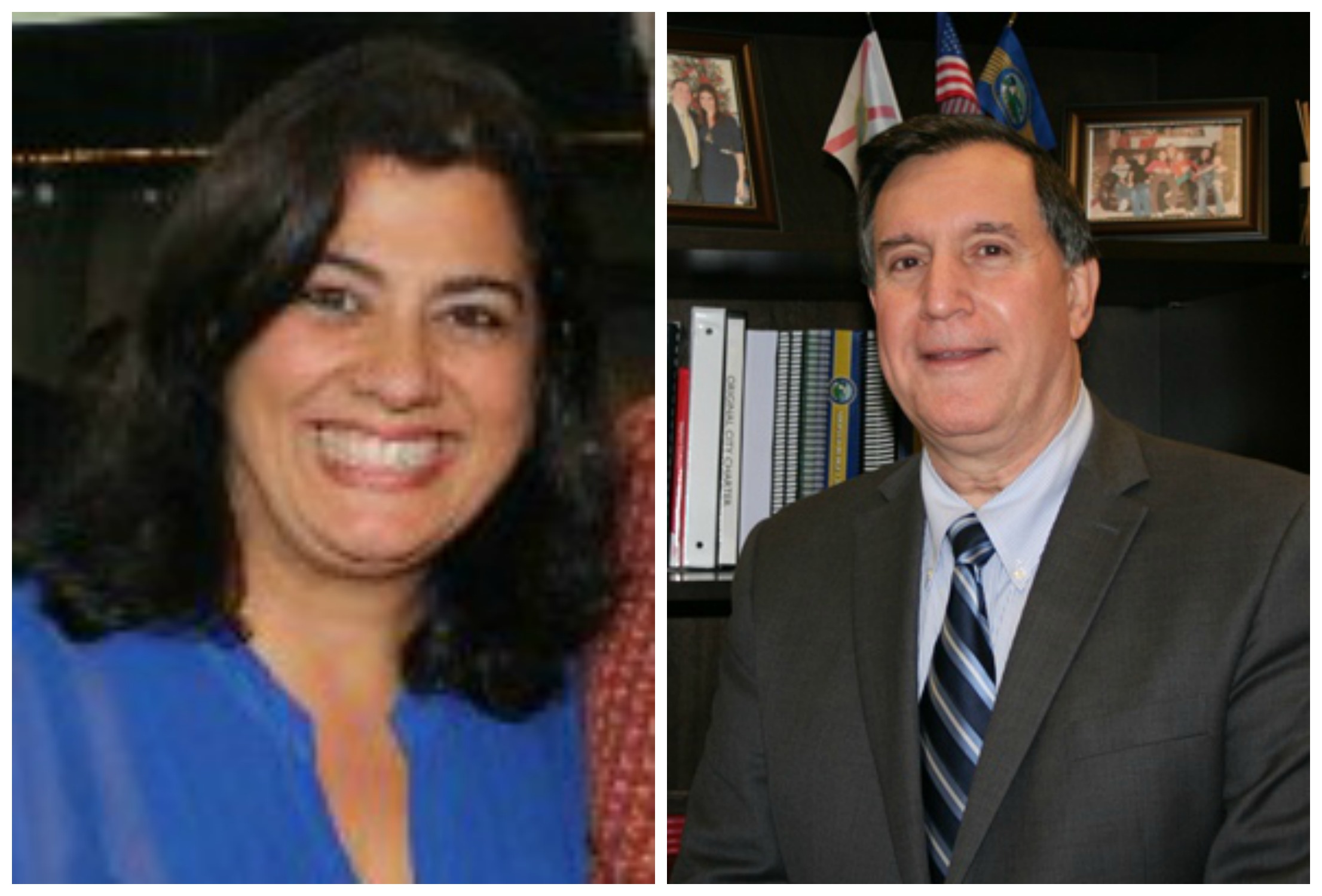
Number 17 isn’t really one of the IOUs: EV Services, the company where Barby Rodriguez Gimenez , the mayor’s daughter-in-law, works doing “public outreach.” That’s more like “criteria” for the contractor to get the job. Barby — photographed to the right with Julio Gimenez, who used to work for Munilla Construction Management (which is conspicuously absent from Wednesday’s gravy train) — already has a piece of another contract, getting paid $21.75 an hour.
We don’t know exactly how much more an hour she will get with this contract. That is in further documents that are not yet available to us or to the commission. Those are the details that the few inquisitive commissioners we have left should ask. And Ladra is talking to you, Commissioners Joe Martinez and Xavier Suarez, because Daniella Levine Cava is white water rafting out west on vacation with her husband (she left to the airport from the special anti-immigration commission meeting Friday).
Because these subcontracts is where the devilish details are. This is where the mayor’s BFF’s existing contract exists. Ralph Garcia Toledo, who went from being then Commissioner Gimenez’s driver and bodyguard in the 2011 campaign to being his campaign finance chair and a county employee in 2016, is making $200 an hour for what he self-identifies as mostly clerical work — going to meetings and tracking paperwork. He stands to make a maximum of $18 million over 12 years. A maximum of $18 million.
Read related story: Mayor’s BFF is back for another county contract payola
Well, on that contract anyway. Because it ain’t enough. While Garcia Toledo’s company, GT Construction, is not one of the subcontractors listed for the contracts being considered Wednesday, it is on another contract that is coming up — because this is just the beginning, ladies and gentlemen. A resolution approved by the Chairman’s Policy Council earlier this month and headed to the full commission is a contract award for $11 million for engineering services to Parsons Brinckerhoff (lucky guys they get another one!) to help the Department of Transportation and Public Works “execute projects in its capital improvements plan and implement the Strategic Miami Area Rapi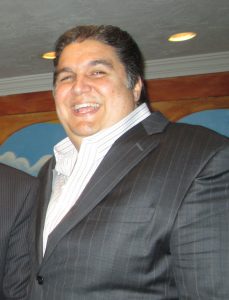 d Transit (SMART) Plan, including the study and implementation of future technology, such as driverless vehicles.”
That’s right, the mayor’s one-time driver is working on the future application someday in the county of driverless vehicles. Because this is where the county needs to spend its public dollars? Yes, the day is coming, as a lobbyist was quick to scold me the last time I wrote about this. Ford announced last year that it would release it’s first fully autonomous car — no steering wheel, no brake or gas pedal — in 2021. But should we be studying that now or can we take care of the real transit issues we are facing and worry about that in 2021 when we know what we’re dealing with?
There is little doubt in anybody’s mind that Ralph’s job at water and sewer is a palanca position, overpaid if not downright duplicated, and most likely unnecessary in the first place. Certainly there are county employees — probably dozens of them — that are more qualified than Ralph to do this job for less than $200 an hour. But there it is. And nobody does anything about it. This new subcontract sure doesn’t seem to be any different.
How many more of the 39 subcontractors are getting paid unnecessarily? How much more could those $82.5 million stretch to address other water and sewer issues? Ralph stands to make $18 million over 12 years just on the first contract. Couldn’t we better spend $18 million on something else?
Nobody has talked about the septic tanks in many parts of East and West Kendall — including Pinecrest and Continental Park — that need to be addressed due to sea level rise. That’s an immediate fix. Not more talk about sea level rise. Real action that needs to be taken, sooner rather than later. Let’s start with the homes and properties closest to the water. How much money are we wasting that could go to remediating that?
Commissioners need to go through these contracts more carefully. These are huge numbers and it’s easy to get away with a few hundred thousand here, $18 million there. They should not be abdicating their responsibility to a strong mayor with a history of giving work to those on his friends and family plan.
read more
Both Zoraida Barreiro and Joe Carollo filed their first campaign finance report in their race for the same city of Miami commission seat and they must be a tad disappointed.
Sure, $14,000 (Barreiro) and $10,000 (Carollo) is respectable — for any novice, first-time no-name. But Barreiro is wife of Miami-Dade County Commissioner Bruno Barreiro, who must not have tapped his donor pool yet (he raised $140,000 last year before he ended up with no opposition). Maybe he’s not 100% on board? And Joe Carollo is the former mayor of Miami, a former city manager of Doral and a buddy of Carlos Gimenez — or at least a member of his 2016 campaign team, at $6,000 a month for a total of $144,000 billed to the mayor’s PAC.
You think he could loan himself more than the $100 he reported earlier this month.
Read related story: Crazy Joe Carollo adds twist to crazy Miami commission race
But both of them did have significant bundling in their reports, as measly as they were. 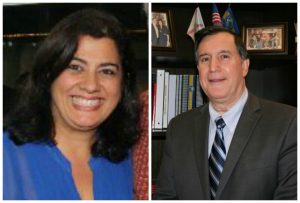 Half of Barreiro’s contributions come from companies owned by former School Board Member Demetrio Perez and $3,000 came from Lanzo Construction. Carollo got $3,000 from Robert Patino, $2,500 from the guy who owns Dade Outdoor Advertising and $2,000 from Norman Braman and his wife, which is kind of weird since Braman supported Raquel Regalado against Gimenez.
But these two aren’t the lowest scoring candidates in what is already a clusterbunch race with seven candidates so far, and qualifying isn’t even ’til September. This is the open seat in District 3, being vacated by Commissioner Frank Carollo, Joe’s baby bro, who is termed out and, reportedly, running for mayor, though he hasn’t filed any paperwork yet. The other candidates and their paultry little piggy banks are:
- Alex Dominguez, with $4,650, has been fundraising for almost two years.
- Olidia “Lee” Hernandez loaned herself $1,000, but she only just filed on Jan. 27.
- Alfonso M. Leon has raised $36,978 — a lot of it in $27 and $40 and $100 and $200 checks.
- Miguel C. Soliman has raised $27,530 — all of it but $1,000 in the first month reported, May.
- Daniel Suarez, who filed in December, hasn’t raised a dime but just loaned himself $55.
Soliman is the only one with any evidence of bundling, which are multiple donations from the same person — using relatives or different corporations — to maximize impact (and access or investment). He got $6,000 from Luis Garcia, who owns Adonel Concrete and several real estate holding companies.
Read related story: Mr. and Mrs. Sarnoff give up seat to Ken Russell, sans runoff
As has been pointed out before, money is not necessarily a sign of who is going to win the election. Commissioner Ken Russell beat a far better financed Teresa Sarnoff in 2015. But it does tell you who has more ability to get their message out. And if the donations come from residents rather than corporations, it could also indicate voter support.
Of course, it’s early yet. And we still don’t know if there are any PACs involved. Only one is listed on the city’s website. But A Stronger Miami, which filed documents in October, has not raised a dime.
So its doing worse than even any candidate.
read more
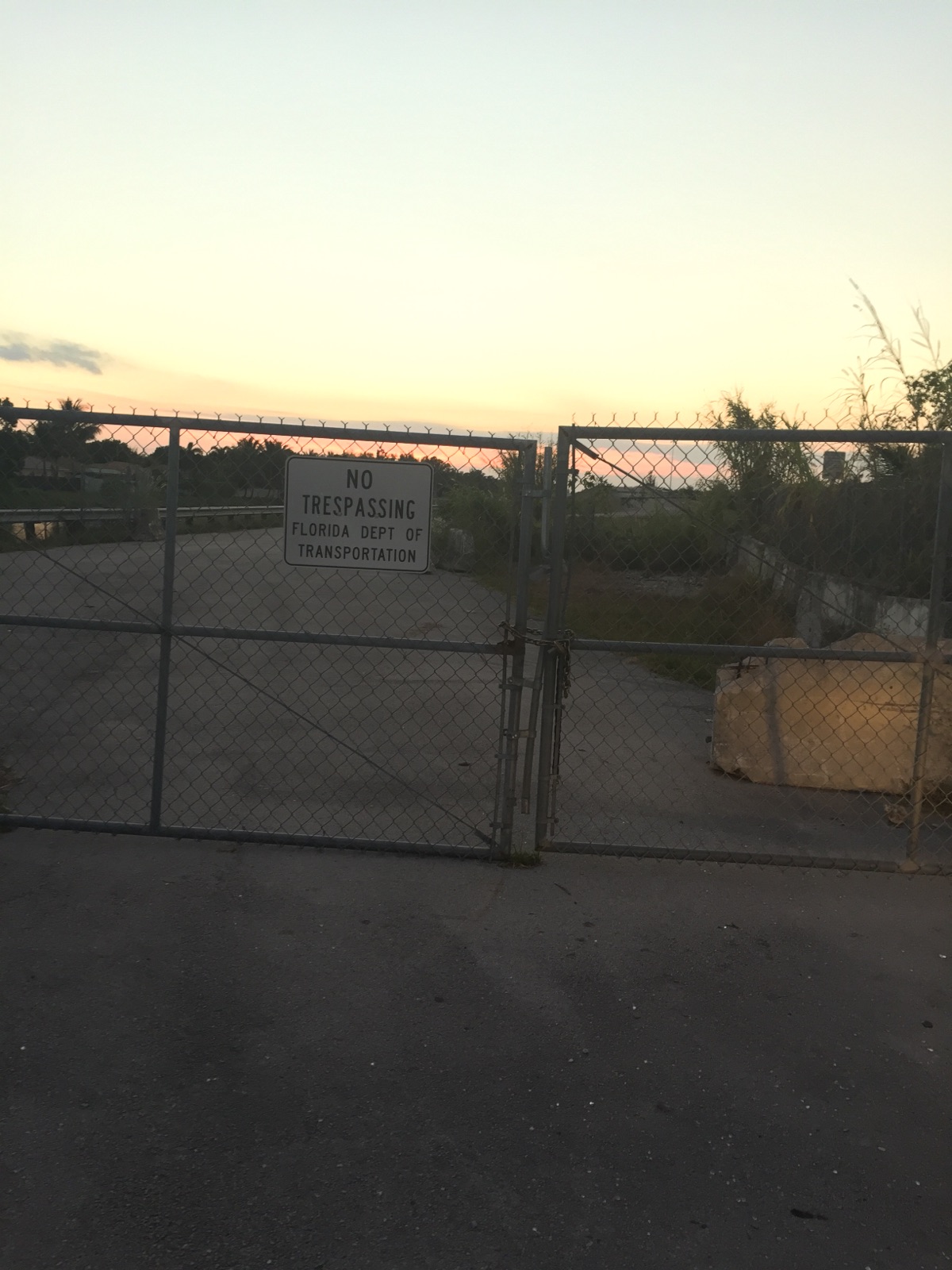
Miami-Dade Commissoner Esteban Bovo wants the Florida Department of  Transportation to open up the Northwest 170th Street bridge over I-75 so that people who live on the west side in Hialeah — where more development is coming, including the American Dream Miami mega mall — can cross over more easily to the Palmetto Expressway and 87th Avenue.
And, of course, vice versa.
But many residents in Miami Lakes and the unincorporated Palm Springs North — who believe the cut-through traffic would destroy their residential neighborhoods — don’t necessarily want easy access to the west side and are none too happy about having the bridge opened to vehicular traffic.
“The traffic we have now is bad enough. This is going to bring more gridlock,” said Robert Scavuzzo, president of the Palm Springs North Civic Association. He is upset that this is coming onto the agenda without any public input on the impact it would have to their neighborhood.
Bovo will ask the commission on Wednesday to urge the FDOT to open up the bridge, a two-lane road built at least as far back as the 1980s for absolutely no reason (read: someone made money off that), because “extending NW 170th Street over I-75 may minimize traffic congestion and increase the flow of traffic, benefitting those who reside and work in the area,” according to the resolution. Key word: May.
It may minimize traffic congestion? Now we’re urging the FDOT to open a bridge to traffic on conjecture?
“About four or five years ago, these bridges — really bridges to nowhere — had no reason to be opened and activated,” 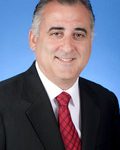 Bovo said, talking about both the 179th and the 154th street bridges, which he says will eventually be opened also. “That has changed. You have substantial development there now.
“I firmly believe that this is going to alleviate an area of congestion that is basically gridlock. It’s going to bring connectivity,” Bovo told Ladra, using one of his favorite buzzwords. “This is an area of Northwest Dade that has been very sleepy for a long time and, unfortunately or fortunately, depending on whose lens you are looking through, it is waking up with a lot of development.
“Both bridges are going to be required to alleviate the traffic that is coming.”
Read related story: American Dream moves along without any ifs, ands or buts
But Miami Lakes Mayor Manny Cid says he can’t support Bovo’s resolution without a traffic study that says it’s definitely going to help congestion and flow. Not that it may help.
“We do things a little differently in Miami Lakes. We base our actions on fact,” Cid told Ladra.
“They keep saying it’s going to help connectivity in the area, but we’re skeptical,” he said, adding that he would send  an email to Bovo on Tuesday and would be at the meeting Wednesday to oppose the resolution. “We think it’s just going to change traffic patterns and make traffic worse.”
The opening a few years ago of Northwest 87th Avenue, which was controversial back then too, is an example. “Although it was good for Northwest Dade on connectivity, it was bad for Miami Lakes,” Cid said.
In fact, the town council voted unanimously last year to reject any attempt to open the bridge without a traffic study — paid for by either the county or the private developers on the west side of I-75 who are pushing for this — that finds it will benefit the people of Miami Lakes. Which, let’s face it, is a long shot. Opening that bridge might benefit the people west of I-75, who only can get out via 138th or 183rd streets. But it’s unlikely that it will benefit the people on the east.
Except to make it easier to get to the American Dream Miami mega mall.
Bovo and other sources close to the American Dream discussions told Ladra, however, that the owners of the mega mall are not the ones pushing for this. They are working on other entrance and exit points that would be less disruptive to the surrounding residential neighborhood — there has been talk of developing ramps directly onto the property from the Turnpike or I-75 — and their traffic study indicates no need to have the Northwest 170 Street bridge opened.
Though, certainly, it would be a welcome bonus, wouldn’t it?
Read related story: Miami Lakes mayor wants a piece of American Dream pie
More likely, several sources say, this is being pushed by Hialeah Mayor Carlos Hernandez — a Bovo pal and ally — on behalf of and in partnership with
There’s more. Please press this “continue reading” button to “turn the page.”
read more

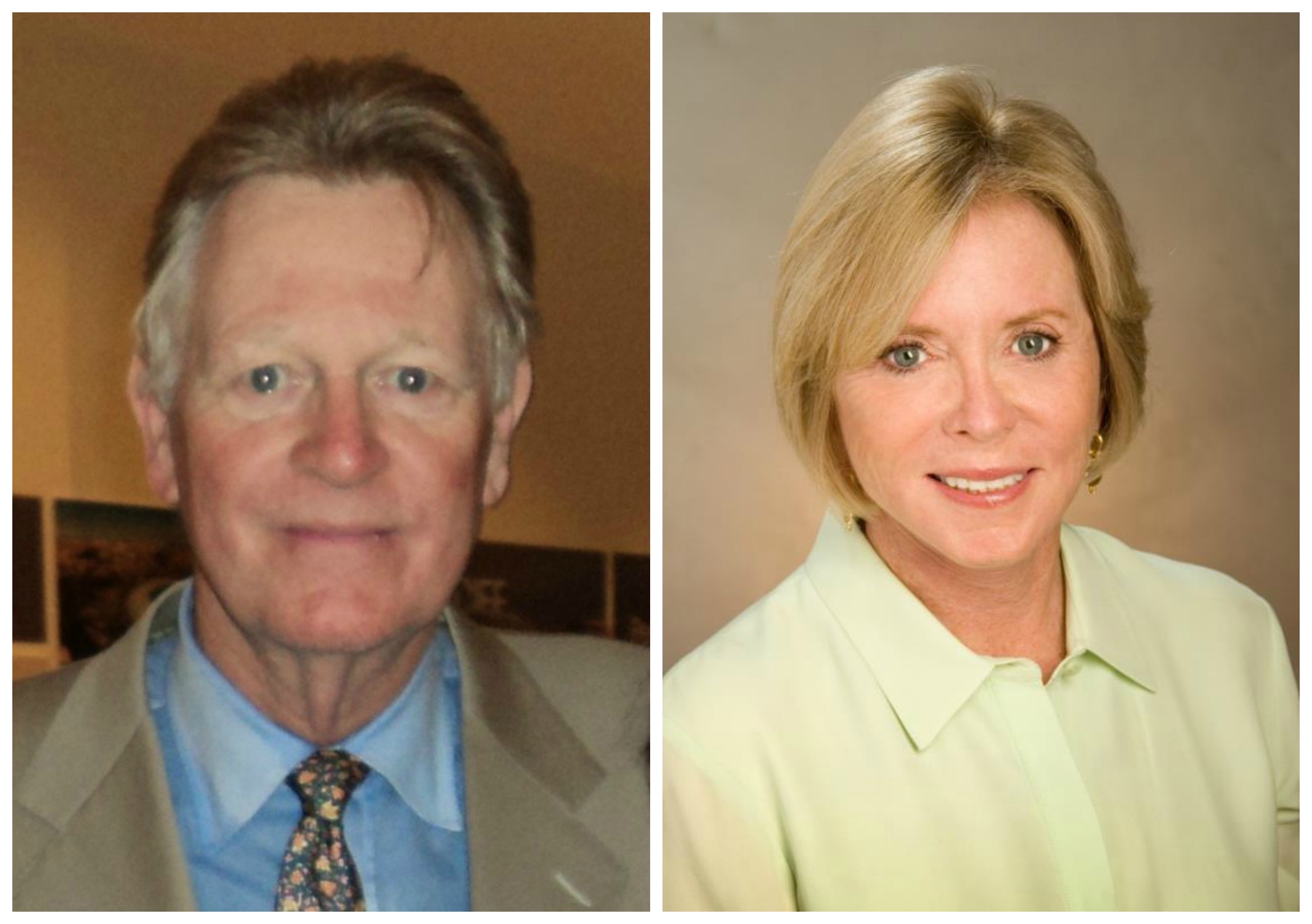 Commissioner Wayne “Chip” Withers, who served for 20 years before leaving office in 2011, qualified last month — for the seat occupied by incumbent Commissioner Pat Keon.
 for the people who live adjacent to it and, more importanty, that the process was flawed. The peer review was tainted, he said, because it was done by architects who worked for the project’s architect on other sites or boards. And he did not get a notice about the zoning hearing because he lives 1,150 feet away on Hardee and the city only notifies residents within 1,000 feet.
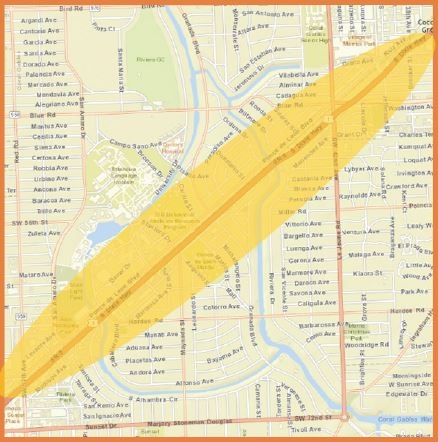 Miami to the northeast for a more consistent zoning application. Otherwise, he says, what we may end up with is a canyon of tall buildings like there is on Bird Road just east of Ponce de Leon Boulevard.