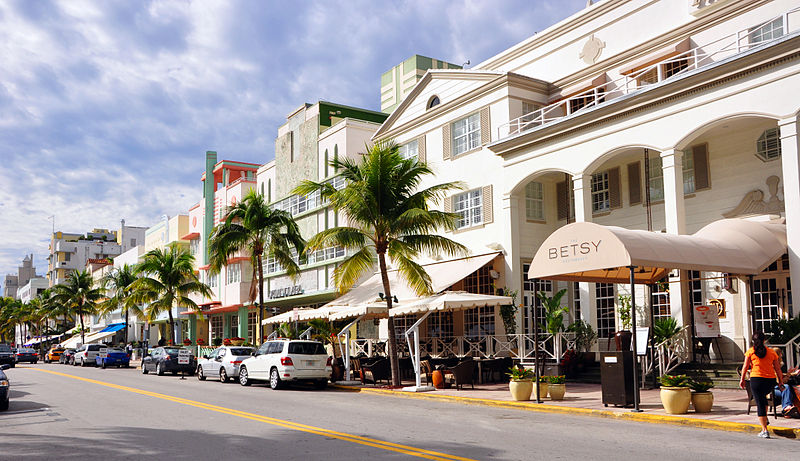
Voters in Miami Beach could change the character of the city’s most famous and celebrated street with a ban on outdoor alcohol sales after 2 a.m. if a referendum on the Nov. 7 ballot is passed.
But they have no information from the city about the impact of such a measure because a promised economic study has not materialized. A “preliminary report” is expected at Wednesday’s commission meeting with a final study due a week before the election is over — and after 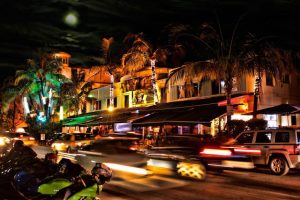 thousands of people have voted via absentee ballots and early voting.
Opponents, however, already have a counter study that says the ban would hurt the city financially, cost jobs and lower property values.
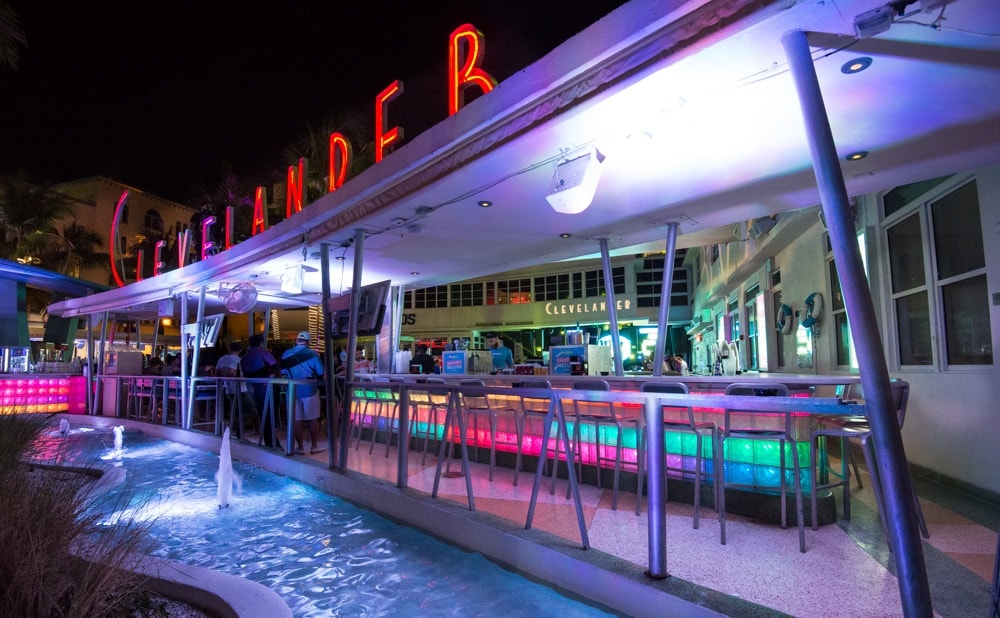
Championed to the point of obsession by Mayor Philip Levine — and one has to wonder why he is so hell bent on making this happen so fast (did someone shoot him down at The Clevelader once?) — the measure, which would change the last call only at outdoor bars from 5 a.m. to 2 a.m., is promoted as a tool for public safety in response to a shooting over a parking space on Memorial Day weekend.
But when commissioners voted unanimously in June to put this question on the ballot, they were basically promised an economic study on the impact by Sept. 1. And guess what? That didn’t happen.
There is no data to show the ban — which seems directly targeted at only three businesses in a 15-block strip — will curb violence. The city’s own statistics show that 911 calls for police and fire rescue in the Ocean Drive area peak between 11 p.m. and 2 a.m.  Those calls drop by about a third between 2 and 5 a.m.
The Memorial Day weekend shooting that set this vote in motion happened at 10:35 p.m., by the way. Also, there have since been shootings on Lincoln Road, Collins Avenue and Española Way, where the mayor owns property.
So a 2 to 5 a.m. ban on just Ocean Drive seems selective and may have zero or at most a very minimal effect crime.
What’s worse is that, if passed, the measure could actually hurt the city financially, according to a study commissioned by the Florida Retail and Lodging Association, which represents businesses along Ocean Drive.
The 27-page report from Fishkind and Associates said that the three-hour change won’t help reduce crime but will have a “dramatic, negative impact on the economy of Miami Beach and significant consequences for the city’s budget.” It also puts the economy of Ocean Drive, where other businesses thrive off the popularity of the people-watching outdoor bars, “at risk to serious economic harm” not just to the three bars that would be affected, but to nearby restaurants and hotels that were surveyed and said the nightlife and hours on Ocean Drive are critical to the choice their guests make to stay here.
The city presented some faulty figures of their own — apparently pulled from thin air and presented in haste before any real, professional study could be done — that only look at Ocean Drive alcohol sales between 2 and 5 a.m. and not what the ban would do to other businesses or the perimeter zones.
“This ordinance will severely alter a formula that has proven successful and allowed hotels and restaurants to flourish,” said Carol  Dover, president and CEO of the FRLA. “If this destructive measure passes, jobs will be lost and taxpayers in the City of Miami Beach will be responsible for footing the bill for the millions of dollars in lost tax revenue.”
The numbers? More than $340 million a year in lost sales (bars + restaurants + hotels). Close to a $2 billion drop in property values. An estimated $20 million hit to the annual sales tax revenue. And 5,500 jobs lost.
City officials don’t have any real numbers to counter because it’s economic study just got started two weeks ago. Even though Levine told commissioners in June that he would get the study done by Sept. 1 so voters could be educated, the contract with Florida International University’s Office of Research and Economic Development wasn’t signed until almost a month after that on Sept. 29. And it gives the school 60 days to complete it.
It won’t take that long, said Amy Mehu, the city’s redevelopment specialist. “They are being expedient in data collection,” Mehu told Ladra Tuesday, adding that the city had trouble finding a firm to do the study. “Many firms stated conflicts of interests because they had done work for the hotel industry or businesses on Ocean Drive.”
Commissioners will get a preliminary report at Wednesday’s meeting and a final report will be available Oct. 31, Mehu said.
That means there’s a whole week for voters to get information before Election Day.
Well, again, except for the thousands of voters who will have already cast their ballots by mail — absentee ballots were mailed out Monday — and in early voting, which begins next week.
 “Talk about putting the cart before the horse,” said Commissioner Kristen Rosen Gonzalez.
She, too, is concerned with a rise in violent crime and the environment on Ocean Drive on a typical Friday night. But she says that the way to deal with that is with more police presence and community policing.
“This is not logical. If this was about logic, we would have commissioned a study before the vote,” Rosen Gonzalez said, adding that she will be voting no and telling her friends and supporters to do the same.
read more
Ladra dares Sen. Jose Javier Rodriguez to put his committee vote into action and resign his seat now
The open congressional seat thanks to the announced retirement of U.S. Rep. Ileana Ros-Lehtinen has attracted almost a dozen hopefuls who want to represent us in Washington, D.C.: A whopping 11 candidates have either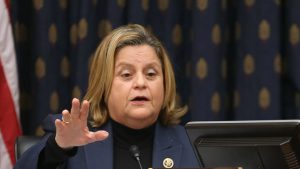 declared their intentions or opened “exploratory” committees.
This includes five who are already in elected office: Sen. Jose Javier Rodriguez, State Rep. David Richardson, Miami Beach Commissioner Kristen Rosen-Gonzalez, Miami-Dade Commissioner Bruno Barreiro and Miami Commissioner Ken Russell. So far, anyway.
One of the wannabes not in office already has a problem with them staying there.
Michael Hepburn, an academic advisor at the University of Miami who Ladra suspects is building name ID for another race, says the “Resign to Run” law that forces electeds to resign one office if they run for a state or local seat should be extended to federal offices, which are exempted from the state statute. These candidates not only cost taxpayers extra, through special elections that could have happened simultaneously with the federal race, they also get a leg up with a bully platform, he said.
Read related story: Bruno Barreiro makes Congress bid official; Dems celebrate
“This exception creates an unfair advantage for the elected official, it’s a conflict of interest, and Floridians should not have to cover the cost associated with creating special elections or continue to cover the salary for these officials — while they use their time on the job to run for another office,” Hepburn said. “This is a democracy and you have every right to run for any political office you deem appropriate. However, if you choose to not honor the term you were elected for – run for another office on your own time.”
“Our aspiring career politicians need to either keep their commitments to the voters that elected them or resign, so someone else can finish the job,” he said, adding that voters he has spoken to agree.
He is right. This exclusion does perpetuate the perception of political stepping stones being used to attain higher office. And you can’t deny the fact that every time Rodriguez or Barreiro or Rosen Gonzalez or the others get free press for doing their job, their congressional campaigns benefit. So they do campaign on our dime and, in fact, could be paying extra attention to issues or neighborhoods that overlap in the district — or even beyond their district or parameters.
These are the reasons why there is proposed legislation that would close the state law loophole — made in 2007 for then-Republican Gov. Charlie Crist, whose name was being floated as a potential VP running mate — and include federal offices in the Resign to Run law.
Read related story: Jose Javier Rodriguez runs for Congress, but it’s not in the bag
Senate Bill 186, introduced by Sen. Travis Hutson (R-Elkton), would require elected candidates who run for federal office where  terms overlap to resign at least 10 days before qualifying begins.
And even though it would go against his self interest by requiring him to resign early, Rodriguez voted in favor of the bill in the Ethics and Elections Committee, where it passed unanimously Tuesday.
But here’s an idea — nay, a challenge — for J-Rod, if he really believes electeds like him should resign to run for a congressional seat: Senator, you don’t have to wait until the full legislature votes on the bill next year. There is nothing stopping you from setting the example and resigning now.
If you voted what you believe in, Ladra dares you to put your money (your job) where your mouth (your vote) is.
read more
We’ve been robbed. Cheated!
The four biggest cities in Miami-Dade have elections next month without a single mayoral race. Not really anyway. The four frontrunners have zero or marginal opposition. That means there will be no debates, no conversation about the direction of these cities, no real choice for the voters of Miami, Miami Beach, Hialeah and Homestead.
Also the commission or council races and the charter questions on the ballots in those cities will suffer from the lack of any real mayoral contest, which is always the main attraction.
In Miami, Commissioner Francis Suarez is the presumed winner after Commissioner Frank Carollo, who is termed out this year, failed to throw his hat in the ring. Everyone held their breath til the last minute on the qualifying deadine because Carollo was supposed to challenge Baby X. But many political observers speculate that his brother, former mayor Crazy Joe Carollo, le tiro la jarrita de agua fria by jumping into the commission race in Group 3 (more on that later), because it would be harder to get two Carollos on the dais and even if he did, then what? Yeah, sure, there are three others who qualified for the Miami mayoral race but none of them have raised any money or are considered real candidates, so they will go unnamed. Expect Suarez to get 93% of the vote.
In Miami Beach, former State Sen. Dan Gelber gets a free ride thanks to Commissioner Michael Grieco‘s self destruction with the secret PAC that he denied having anything to do with but that is now under investigation by a really selective State Attorney who has seemed to look the other way at far more egregious PAC problems (more on that later). Again, three others qualified, but, again, they will go unnamed because none has raised more than $6,000 (to Gelber’s $500K-plus account) and their names won’t matter after Nov. 7 anyway.
Read related story: Mystery Miami Beach PAC goes down, but new PAC is up
In Hialeah, Mayor Carlos Hernandez is apparently not termed out, as an attorney for former Mayor Julio Martinez had argued in court, trying to boot the admitted loanshark and absentee ballot bully out of the race. Alas, a judge ruled with the city’s warped thinking, which is that a half a term is not to be counted. Getting Hernandez off the ballot was the only way to get him out of City Hall. It was the only chance anyone had. There’s a lady challenging him, but while she’s very brave (her husband is a city employee), she stands zero chance of making a dent in the Hernandez election armor. That means that he can use more money earmarked for needy kids to give his needy staff vacations in Vegas.
And in Homestead, Mayor Jeff Porter — who has brought some stability to the county’s fourth largest city after the last mayor was arrested for corruption — is automatically re-elected de-facto after nobody dared oppose him.
Yawn.
If it hadn’t been for Annette Taddeo‘s win last month over former State Rep. Jose Felix “Pepi” Diaz in the Senate 40 race, this would be the most boring local election year ever.
Not that I don’t like Porter or Baby X or even Sen. Gelber (notice I didn’t include Carlitos because Ladra does, indeed, dislike the Hialeah hoodlum). Those three are all fine gentlemen with good track records, it seems, so far anyway. But I miss the process by which ellos se destacan. I want them to lay out their ideas and defend their positions and plans. You should too.
This just handing them over the seat seems like a bad idea.
It’s also a terrible reflection of our community that we didn’t have more qualified people vying for these important posts.
read more
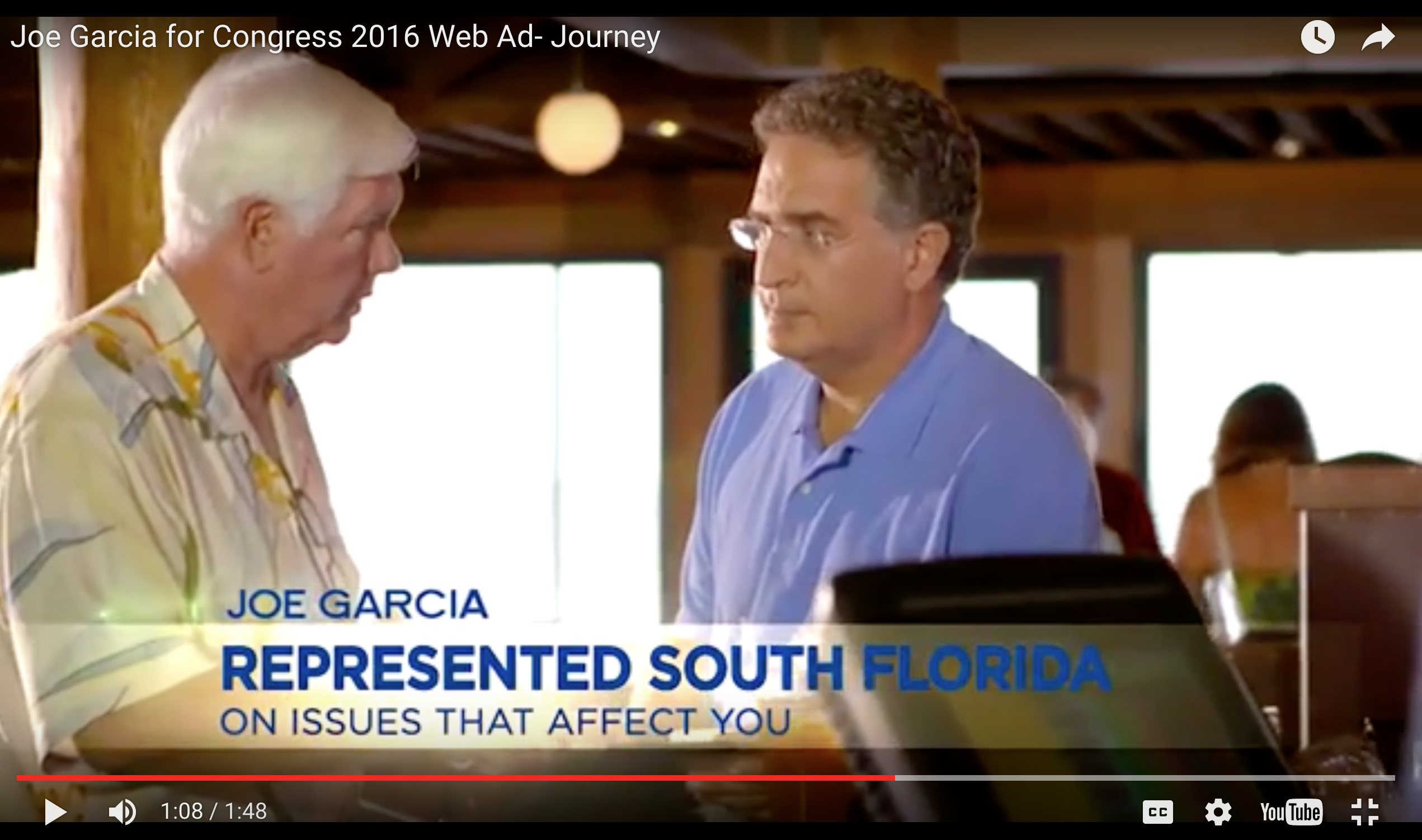
Former Congressman Joe Garcia, who lost his seat to Rep. Carlos Curbelo first in 2014 and again in last year’s bid to regain it, has joined his former campaign consultant, Juan Peñalosa, at the the mostly Democrat consulting and lobbying firm Mercury LLC, which will open an office in Miami.
Garcia’s addition as co-chairman of Mercury was announced Wednesday. He is tasked with expanding the new Miami team and the firm’s reach in Florida, across the country and south of the border.
Read related story: Joe Garcia releases first web ad in congressional contest
Which means he won’t have time to run against Curbelo or anyone else in 2018. “It’s pretty certain that I won’t be on the ballot next year,” Garcia told Ladra Wednesday morning, adding that he was excited abut this new venture in government and public affairs, which is nothing ne w to him.
“I’ve been in public service all my life and when this opportunity came along, it was perfect. I’m working with people I highly respect and I’ve known for a better part of a decade,” Garcia said, referring not only to Peñalosa but also Mercury Partner Ashley Walker, who he worked on the Obama for America campaign.
Said Walker: “We are excited to welcome Joe Garcia to the Mercury family. His extensive policy experience will be invaluable as we expand our footprint in Miami, and across the Sunshine State.”
During his time in Congress, Garcia, an attorney, served on the House Judiciary Committee — which is where he was caught on a C-SPAN camera in 2014 eating his own ear wax — where he was on the Subcommittee on Immigration Policy and Border Security, and the Subcommittee on Regulatory Reform, Commercial and Antitrust Law. He was also a member of the Committee on Natural Resources, including its Subcommittee on Energy and Mineral Resources; Subcommittee on Fisheries, Wildlife, Oceans and Insular Affairs; and Subcommittee on Public Lands and Environmental Regulation.
Read related story: New Joe Garcia ear wax footage — great TV, bad PR
Prior to being elected, Garcia was appointed in 2009 by President Barack Obama to the  Department of Energy as Director of the Office of Economic Impact and Diversity. Garcia is also former Chairman and member of the Florida Public Service Commission. Before that, he served as board member and Executive Director of the Cuban American National Foundation, and is credited with the group’s softened stance on Cuba policy.
“We are pleased to welcome Congressman Garcia to the Mercury team. His extensive policy experience in the energy and utility sectors, as well as his deep relationships in Washington, will be a tremendous asset to our clients,” said Mercury Co-founder and CEO, Kieran Mahoney.
The job also gives Garcia an opportunity to work on the same issues that he held near and dear in D.C. — like immigration (where he is right) and the U.S.-Cuba relations and policy (where he is wrong). Garcia is attending a Haitian activists’ event Wednesday night to advocate for the expansion of Temporary Protected Status. And he wants to also preserve the Obama administration’s Cuba policy.
In addition to growing Mercury’s Miami and Florida presence, Garcia said he will be paying attention to issues and campaigns in Latin America, “which is playing a bigger role in local politics.”
Will he ever be on a ballot again? Ladra says probably.
“Public service is a calling. And I love doing it.”
read more
Well, what do you know? Pushed into a corner by a majority of Miami-Dade County commissioners and an army of activists and angry residents to restore the funding cuts he proposed for transit services (bus routes and Metrorail hours), Miami-Dade Mayor Carlos Gimenez suddenly found at least $16.2 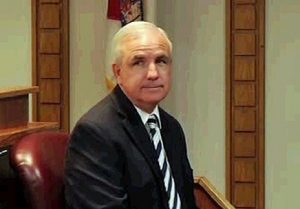 million we didn’t have before.
More found money!
Okay, it’s not like, “Oh, there it is! I was wondering where I put those $16 million!” It’s not like he’s a street magician making quarters appear out of thin air. Although sometimes it seems that way, don’t it? That’s because we’ve become accustomed to Gimenez just opening a drawer full of money whenever he is forced to go look for it. We shouldn’t be too shocked. This always happens at budget crunchtime. In fact, Ladra is only surprised it’s a measley $16 million and predicts that figure could rise as he opens more hidden drawers and trap doors on the 29th floor at County Hall. Look for good news (read: more bait and switch) at Thursday’s budget hearing.
I mean, wasn’t it a $200 million shortfall in 2014 when Gimenez first threatened to fire 700 county workers, including 255 police officers, then it was 130, then 100, then 70 and then — abracadabra — none! The money was found to save all the police jobs. Just as it was found to save the libraries the year before and stop the fire station brownouts the year before that. Was it last year he found $5 million out of the blue to fund  The Underline? Or was that the year before? It all blurs togegther, which Ladra thinks is by design (and, wait, is that money parked somewhere? Or was it spent? If so, on what?).
Read related story: Carlos Gimenez’s new bait and switch — pay cuts to benefits
This year, the bait and switch is with — what else? — transit, the obsession du jour. Gimenez and, by extension, the county budget director, Jennifer Moon, were hard pressed to find the $19 million that had been cut from the transit budget after the first budget hearing earlier this month and dozens of people spoke about the hardship this would cause transit-dependant workers. A majority of commissioners — in a rare but welcome momentary reunion with their respective spines — refused to pass the budget. Commissioner Xavier Suarez suggested dipping into the reserves to cover the transit cuts, but before that could happen, Commissioner Jean Monestime changed his vote and the budget passed 7-6. But staying with Suarez in dissent were Bruno Barreiro, Audrey Edmonson, Barbara Jordan, Daniella Levine Cava and Joe Martinez.
Some said they would vote against it again at Thursday (Sept. 28) meeting if the transit cuts were not addressed. Or even switch their vote. “Yes, for now,” said Chairman Esteban “Stevie” Bovo. I mean, how could they be taken seriously about the SMART plan and expanding mass transit if they were cutting services wholesale?
“We do have a lot of money. We just don’t allocate it properly,” Suarez said.
And, on Wednesday, the mayor proved him right.
“At the first budget hearing, the board made it clear that your priority for funding was public transportation. I share your opinion that in order to be a truly resilient community now and in the future, we must solve our mobility  issues,” the mayor said, and suuuure he shares their opinion noooow.
Gimenez found $2.6 million by adding more limited holiday schedule dates to Metrorail and another $4.4 million by cancelling four bus routes that overlapped with free trolleys and municipal circulators. Really? How many years have we been wasting those $4.4 mil? He also “redirected” about $5.5 million in People’s Transportation Plan funds, just when we are supposed to start weaning ourselves off those funds (futher “redirecting” $6 million in road impact fees to replace it), and saved another unexplained $900,000 in overhead. Just like that. Snap!
And voila! You have $13 million for transit.
Read related story: Libraries saved! Carlos Gimenez performs another magic trick
In his memo to commissioners, Gimenez also laid out additional savings of at least $3.2 million he found in “additional carryover,” whatever that is, since the last budget hearing and which he has applied to the commissioners’ wishlist — including $200,000 for an additional doctor to perform spay and neuter operations at the animal shelter (which doesn’t seem like the best use of funding), $500,000 for an additional police cadet class, $340,000 to cut the grass on medians 17 times a year (current budgeting), $250,000 for canopy replacement and $270,000 for 900 more hours of tutoring at select libraries. Another $1 million was found to practically double the Hurricane Irma reserves (and the commission will be briefed at 1 p.m. on clean up and other recovery efforts).
Is anybody else at all concerned with the ease with which these monies were, 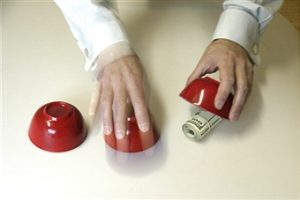 once again, moved around like peas in a shell game?
“The idea that we were headed into approval of a budget and now, lo and behold, $13 million, $14 million, $15 million appear out of nowhere all of a sudden,” Suarez said in a telephone interview after Wednesday’s government operations committee meeting and you could practically see him shaking his head through the phone waves. He also said that he hopes the mayor can look a little harder and find more funds now for housing and capital projects, too.
Hopefully, the other commissioners will be as unsatisfied with this bait and switch and see it for the mismanagement and evidence of ineptitude that it truly is. Because if a reluctant and petulant mayor found $16 million in a week, how much is really padding the budget that a more motivated individual might find?
And what does this really tell us?
It tells us that there is overlap in functions and services — you think trolleys and buses are the only example of that? — which are also wasting resources we need for other things like full-time park employees and recreational programs and a civilian oversight board for police and compliance officers to investigate possible violations of the human rights ordinance.
It tells us that the mayor and administration are not reflecting the priorities of the commission — or the community — in the budget.
It tells us that we should have zero confidence in the budget that Gimenez produces and the figures he and Moon provide to the commission. After all, they both presented a Doom’s Day austere budget and said that there was no money to be found for anything else — and then, bingo, here’s $16 million.
And it tells us that former Commissioner Juan Zapata was right when he kept insisting, like forever, that the commission should have its own budget director.
Read related story: Miami Dade Mayor Carlos Gimenez saves us — from himself
“It’s the same story every year,” Zap told Ladra Wednesday. “Absolutely the county commission neeeds their own budget director and staff. I advocated and filed legislation to push for this for years. Budget staff would misinform my colleages and purposely sabotage my efforts.
“The current process allows for no checks and balances or accountability to taxpayer dollars. It’s a joke and in desperate need for reform,” Zapata said. “If the commission doesn’t take steps to bring about change, citizens should start a petition drive to place the issue on the ballot.”
Why wait? Ladra smells a passion project. And if the people at New Florida Majority or Engage Miami really want to make a permanent and significant difference, here’s something palpable.
The second and final public hearing on the mayor’s proposed $7.2 billion budget begins at 5 p.m. Thursday (Sept. 28) at County Hall, 111 NW First Street, and will be broadcast live on channel 77 and online at the county website.
read more
Former State Rep. Jose Felix “Pepi” Diaz is nothing if not a formidable fundraiser.
Everyone expected the Senate District 40 race to be expensive and Ladra even suggested it could be the most expensive Senate race in Florida history. We’ll have to wait until the final campaign finance reports are submitted weeks from now, but so far it looks like at least $5.5 million has been spent so far on TV and phone banks and so many mailers. Some days, there were eight pieces in our mailbox. Eight!
Maybe it will be $6 million plus by the final tally.
Is that a record? Can anyone tell me?
Diaz, a Republican golden boy who lost this heated battle in an upset against perennial loser Annette Taddeo Tuesday (51% to 47%) spent more than three times as much as the  victor with a whopping $4,283,911 between his campaign account and his two PACs, Rebuild Florida and Leadership for Florida’s Future, in his bid to jump from one chamber to the next. That includes $651,694 in in-kind donations — mostly for polling, research and staff — from the Florida Republican Senatorial Committee because the GOP was just as desperate to keep the seat as the Dems were at taking it back.
And that is just as of Sept. 21, the last date on the last filed report. When the last reports are in next month, illustrating the flurry of expenses on the last five days, that number could easily be closer to $5 million.
But let’s just keep it at $4.2 mil for now. That’s $4,283,911 for a total of 20,985 votes, which comes out to $204.14 per vote. Again, so far. That number is only going to go up.
In comparison, Taddeo, spent a total of about $1,286,032 between her account and her two PACs, Fight Back Florida and the Florida Democratic Legislative Campaign Committee. That also includes at least $274,213 in in-kind donations from the Florida Democratic Party for things like research and polling and campaign staff. Divided amongst the 22,649 who voted for her Tuesday, that comes out to $56.78 a vote.
Much of the spending went to the
What does this tell us? This tells us that Team Taddeo was able to do more with less and that the people on that team, which include Ashley Walker, Christian Ulvert, Carlos Odio and, I believe, Raul Martinez Jr., should be banking on the next campaign they work on. That is, if they don’t have Senate jobs by now.
It also tells us that Pepi Diaz could spend up to $200 or more per vote if/when he runs for Attorney General. He’s going to put those fundraising skills to the test.
read more

 thousands of people have voted via absentee ballots and early voting.
 Those calls drop by about a third between 2 and 5 a.m.
 Dover, president and CEO of the FRLA. “If this destructive measure passes, jobs will be lost and taxpayers in the City of Miami Beach will be responsible for footing the bill for the millions of dollars in lost tax revenue.”
 “Talk about putting the cart before the horse,” said Commissioner Kristen Rosen Gonzalez.